Physical Address
Delhi, India
Physical Address
Delhi, India

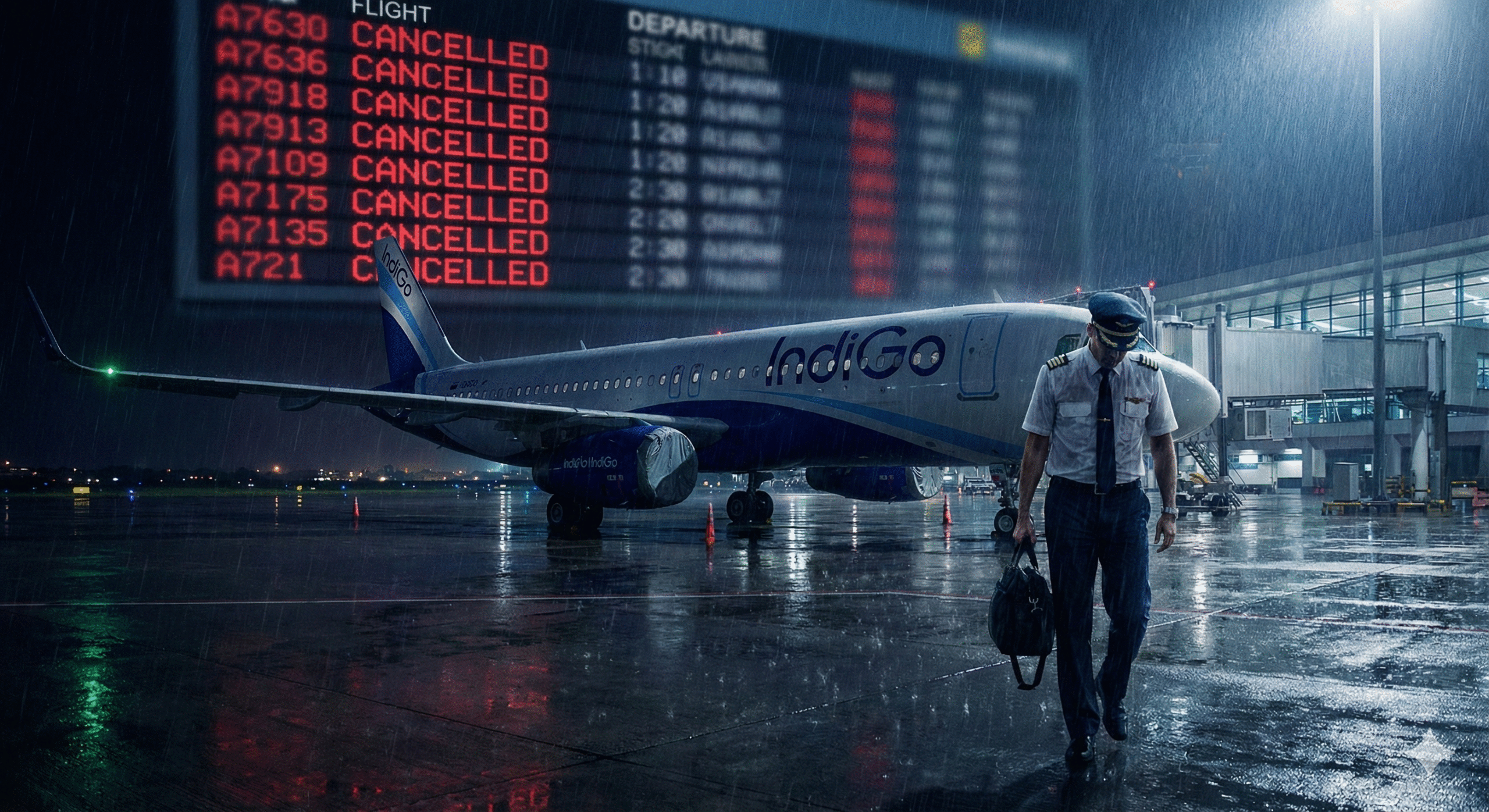
The Blue Bird is Down: How IndiGo’s “Arrogance” Crashed Indian Aviation Investigative Analysis | December 15, 2025 | 10 Minute Read
For 18 years, IndiGo has had one job: to be boringly predictable. You buy a ticket, you board on time, you land on time. That “6E” promise built an empire that captured 60% of the Indian market.
But the first week of December 2025 will go down in history as the week the empire blinked.
Between December 2nd and December 8th, the country’s largest airline didn’t just stumble; it collapsed. Over 2,000 flights were cancelled. Tens of thousands of passengers were left stranded at airports from Delhi to Bangalore, sleeping on conveyor belts and fighting with ground staff. The stock price tanked by 17%, wiping out ₹40,000 crore in market value.
How did a company obsessed with “On-Time Performance” suddenly become the face of national chaos? The answer lies in a toxic mix of corporate greed, pilot fatigue, and a high-stakes poker game with the Indian government.
To understand the crash, you have to look at the cockpit. For years, Indian pilots have complained of exhaustion. In response, the DGCA (Directorate General of Civil Aviation) introduced strict new Flight Duty Time Limitations (FDTL) which kicked in fully on November 1, 2025.
The New Safety Rules:
Here is the scandal: IndiGo knew this was coming since January 2024. They had nearly two years to hire more pilots. Instead, critics allege the airline maintained a “hiring freeze” and razor-thin crew buffers to maximize profits. When the rules kicked in during the peak December wedding season, the system snapped. They simply ran out of pilots legally allowed to fly.
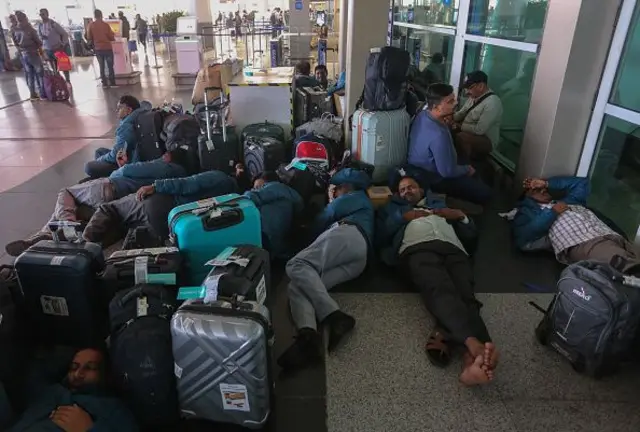
Chaos at T3 Delhi as cancellations mount (Representative Image).
This is where the story gets darker. Aviation experts and unions are accusing IndiGo of engineering the crisis.
The theory is simple: By allowing the chaos to unfold, IndiGo showed the government, “If we don’t fly, India stops.” With Air India still restructuring and Akasa/SpiceJet too small to fill the gap, IndiGo is a monopoly in all but name.
And the tactic worked. On December 6, the government blinked. In a controversial move, the DGCA exempted IndiGo from the new pilot safety rules until February 2026.
Think about that. The rules meant to keep you safe—by ensuring your pilot isn’t falling asleep at the wheel—were suspended because the airline was “too big to fail.”
The operational meltdown coincided with a financial disaster. For the first time in two years, IndiGo reported a massive quarterly loss of ₹2,582 crore in Q2 FY2026.
While the executives fought in boardrooms, the common man paid the price.
With 2,000 flights cancelled, demand outstripped supply instantly. Algorithms went haywire. A one-way ticket from Delhi to Mumbai, usually ₹5,000, touched ₹45,000. Some urgent last-minute fares were seen crossing ₹1 lakh.
We heard stories of families missing weddings they had planned for months. We heard of patients missing organ transplant surgeries. The government eventually stepped in to cap fares, but for many, the damage was already done.

Over 70 IndiGo A320neos remain grounded due to engine shortages.
IndiGo will survive this. They have too much cash and too much market share to disappear. But something fundamental has broken: Trust.
For a decade, we tolerated the tight legroom and the relentless upselling because they were reliable. “On-time” was their currency. Now, that currency is devalued.
The events of December 2025 have shown us the dangers of a monopoly. When one airline controls 60% of the sky, they don’t just transport the nation; they control it. And as we learned this week, when the monopoly catches a cold, the rest of us get pneumonia.
The question isn’t whether IndiGo will fly again. The question is: Next time you book a ticket, will you hold your breath until you actually take off?