Physical Address
Delhi, India
Physical Address
Delhi, India

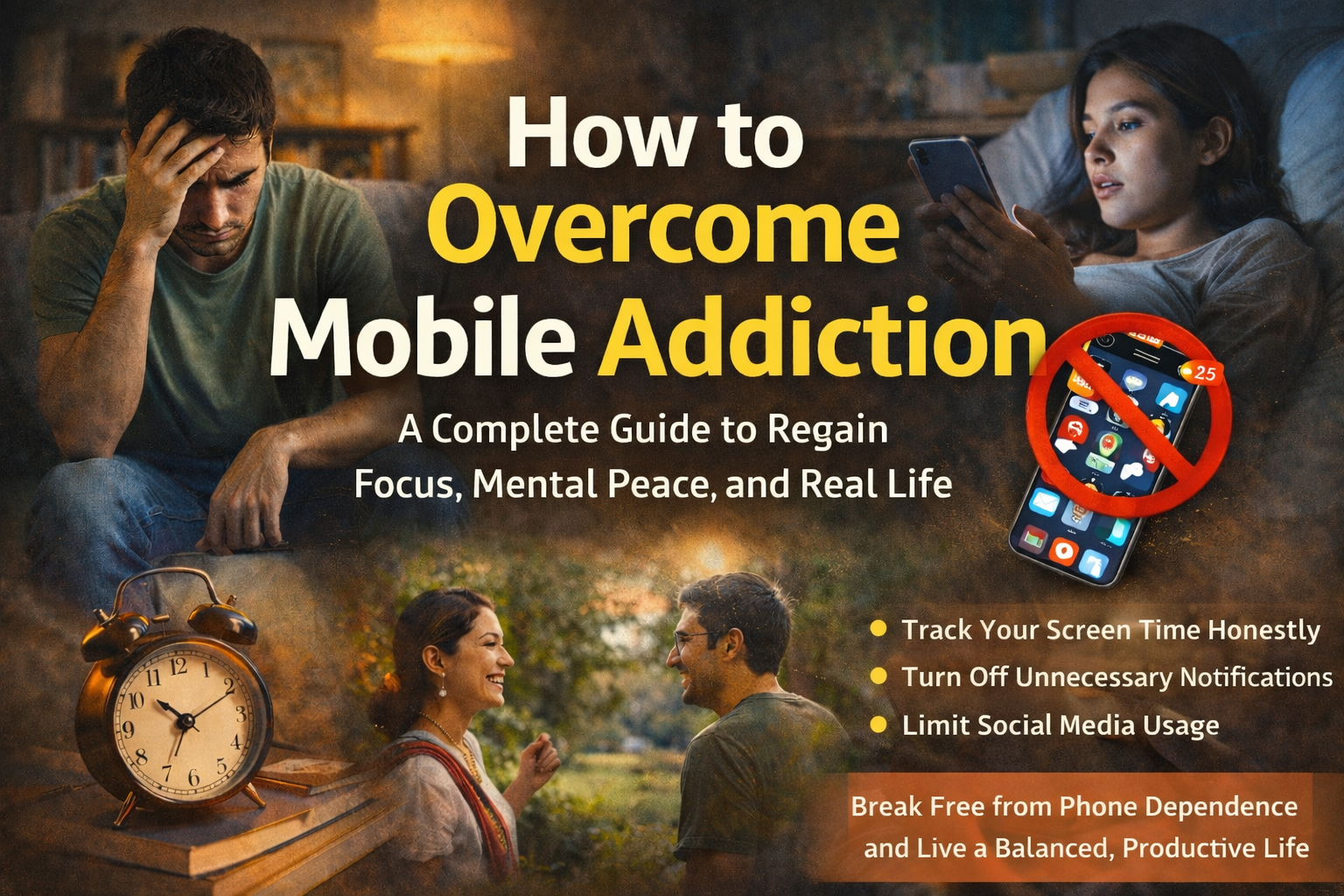
In today’s digital world, smartphones have become an inseparable part of our lives. From waking up in the morning to falling asleep at night, our phones are always within reach. We use them for communication, entertainment, learning, work, and even relaxation.
But there is a thin line between using a smartphone and being controlled by it.
If you constantly check your phone without any reason, feel restless when it’s not around, or lose hours scrolling through social media, then you might be dealing with mobile addiction — one of the most common and dangerous habits of the modern age.
The good news?
Mobile addiction is not permanent.
With awareness, discipline, and the right strategies, you can regain control of your time, mind, and life.
This article explains:
Mobile addiction is a behavioral habit where a person feels an uncontrollable urge to use their smartphone excessively, even when it is unnecessary or harmful.
It is not limited to one age group. Today, it affects:
People with mobile addiction often use their phones not out of need, but out of habit, boredom, anxiety, or emotional dependency.
Excessive mobile usage can lead to:
Social media comparison plays a major role. Seeing “perfect lives” online makes people feel inadequate, unhappy, and dissatisfied with their own lives.
Long hours of screen time can cause:
Blue light exposure at night directly affects melatonin production, making it harder to fall asleep.
Mobile addiction seriously impacts:
Students find it hard to study, while professionals experience reduced productivity and frequent distractions at work.
When phones replace conversations:
People start living more in the virtual world than in the real one, leading to loneliness.
You should be careful if you:
Recognizing these signs is the first step toward recovery.
Awareness creates change.
Check:
Most smartphones offer Screen Time or Digital Wellbeing features.
You cannot fix what you don’t measure.
Notifications constantly interrupt your brain.
This reduces the urge to pick up your phone again and again.
Checking your phone immediately after waking:
Start your morning without your phone for at least 60 minutes.
Late-night phone usage:
Turn off your phone at least 1 hour before sleeping.
If your phone is within reach, temptation increases.
This single habit can significantly reduce night-time usage.
Quitting social media completely is difficult, but controlling it is possible.
Mindless scrolling is the biggest cause of addiction.
Mobile addiction often starts due to boredom.
Replace phone usage with:
Your brain needs engagement, not endless scrolling.
Choose:
To stay completely away from your phone.
At first, it feels uncomfortable — but later, incredibly refreshing.
Real conversations heal the mind.
Human connection is the strongest cure for digital addiction.
Switching your phone to black-and-white mode:
This psychological trick works surprisingly well.
If you:
Reward yourself with something healthy — a walk, a treat, or relaxation time.
Positive reinforcement builds consistency.
Mobile addiction is a habit — not a weakness.
Do not blame yourself. Focus on improvement, not perfection.
Phones are not bad — misuse is.
Use your phone to:
Make your phone a tool, not a master.
Mobile addiction is one of the most serious yet ignored problems of modern life. Left unchecked, it can damage:
But with awareness, discipline, and small daily changes, you can break free from this addiction.
Control your phone before it controls you.
Start today — even one small step can lead to a healthier, more balanced life.