Physical Address
Delhi, India
Physical Address
Delhi, India

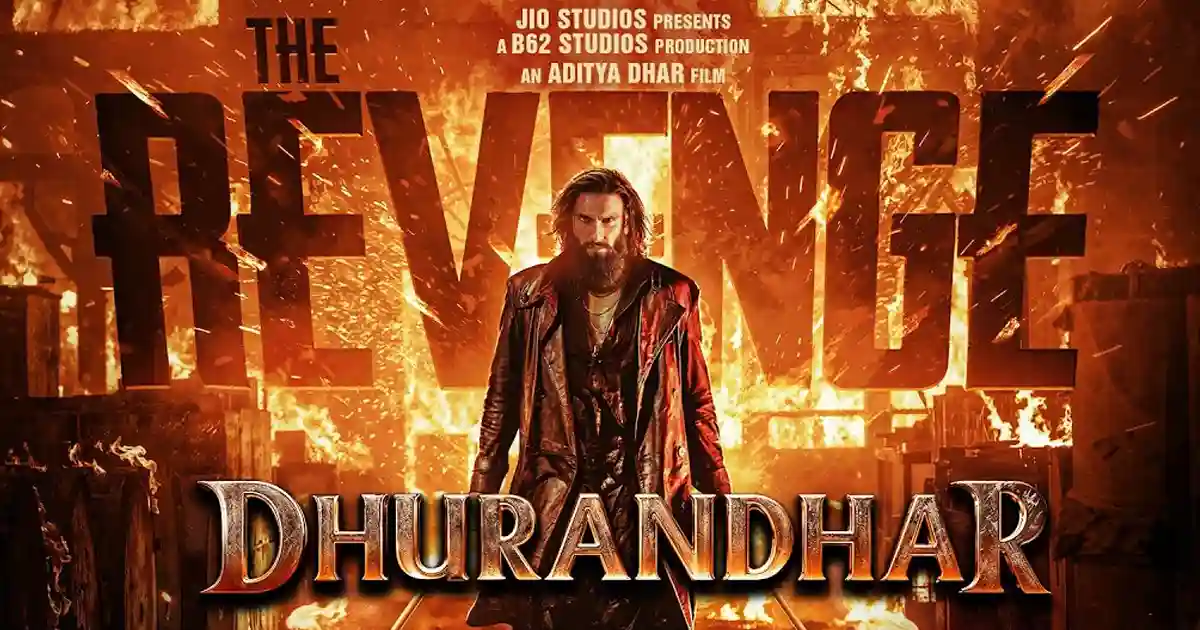
It's 3 hours and 49 minutes long, incredibly violent, and currently tearing up the global box office. But is Dhurandhar 2: The Revenge actually a good movie? Read our detailed, no-spoilers review covering Ranveer Singh's masterful performance, the missing magic of Part 1, and the climax everyone is talking about.
Dhurandhar 2 Review: A 4-Hour Bloodbath That Breaks Box Office Records (But Does It Beat Part 1?)
Movie Review & Analysis | March 25, 2026 | 15 Minute Read
Let’s just address the elephant in the room right away. Dhurandhar: The Revenge is 3 hours and 49 minutes long. Yes, you read that correctly. You are going to need a very comfortable theater seat and serious stamina to get through this.
It has been six days since Aditya Dhar’s highly anticipated sequel crashed into cinemas on March 19, 2026. The clash with Yash’s Toxic was the talk of the town, but the numbers speak for themselves. As of today, Dhurandhar 2 has bludgeoned its way past the ₹800 crore mark globally. Rajinikanth is calling it the “Box Office ka Baap,” and theaters are adding midnight shows to keep up with the demand.
But strip away the hype, the dizzying box office math, and the deafening social media wars. As a piece of cinema, does Dhurandhar 2 actually deliver? I walked into a packed morning show to find out if Ranveer Singh’s return to Lyari is a masterstroke or just an overblown, hyper-violent sequel that forgot what made the first film great.

Ranveer Singh carries the almost 4-hour runtime squarely on his shoulders.
Part 1 ended with a gut-punch. The ruthless Rehman Dakait (played brilliantly by Akshaye Khanna) was dead, and our undercover protagonist Hamza Ali Mazari / Jaskirat Singh Rangi (Ranveer Singh) was left standing in the ruins of Karachi’s Lyari underworld.
The Revenge doesn’t just pick up the pieces; it sets them on fire. Aditya Dhar uses the extended runtime to take us back to the origins. We finally get the emotional backstory of Jaskirat Singh Rangi—the personal tragedy that stripped him of his humanity and forged him into India’s most lethal covert asset.
In the present timeline, the throne of Lyari is empty, and Hamza is trying to dismantle the ISI-backed terror syndicate from the absolute top. This brings him face-to-face with Major Iqbal (Arjun Rampal, sporting a gold tooth and a terrifyingly calm demeanor) and SP Chaudhary Aslam (Sanjay Dutt).
Here is the hard truth: Akshaye Khanna’s absence haunts this film. Rehman Dakait brought a certain theatrical madness to the first movie that balanced the grim tone. Without him, the narrative feels overwhelmingly dark. Arjun Rampal does a solid job as the menacing ISI officer, but the cat-and-mouse game lacks the psychological tension that made Part 1 a masterpiece.
If you are paying the ticket price, you are paying it for Ranveer Singh. What he does in this movie is nothing short of extraordinary.
We are used to seeing Ranveer explode on screen with boundless, kinetic energy. Here, he is entirely internalized. The way he communicates Hamza’s simmering rage, the PTSD of living as a ghost in an enemy country, and the sheer physical toll of the mission—it’s all done with his eyes. There are scenes where he doesn’t speak a word for ten minutes, yet you know exactly what is breaking inside him.
R. Madhavan returns as Ajay Sanyal (the IB Director modeled on Ajit Doval), and he brings a much-needed gravitas to the Delhi war rooms. Sanjay Dutt as the corrupt local cop feels a bit like a caricature at times, stomping around and shouting, but it works for the single-screen audiences looking for loud confrontations.
Let’s talk about the two things dividing audiences and critics globally right now: the violence and the politics.
Dhurandhar 2 makes Animal look like a Disney movie. The violence here is visceral, sadistic, and relentless. Aditya Dhar doesn’t shy away from showing the brutal reality of gang wars and espionage. Bones shatter, bodies burn, and the camera refuses to look away. International publications like the New York Times have already slammed the film for its brutality, calling it “sociopathic.” They aren’t entirely wrong—there comes a point in the third hour where you just feel numb to the bloodshed.
Then comes the political angle. The film wears its hyper-nationalism proudly on its sleeve. While Part 1 balanced its patriotism with a tight, logic-driven spy script, Part 2 sometimes leans too heavily into speechifying. Characters occasionally stop the narrative just to deliver heavy-handed monologues about how incredible the Indian agencies are.
As veteran actor Anupam Kher rightly pointed out in his viral review video, it is a film that “makes you feel proud of your country.” For the domestic audience, the high-octane tribute to the nameless, faceless heroes of the intelligence bureau works like gangbusters. But purely from a screenwriting perspective, the jingoism sometimes overrides the logic of the plot.
Aditya Dhar originally planned this as one massive film before splitting it into two. Unfortunately, that decision shows.
The first half is a slog. It spends too much time meticulously detailing the inner workings of the Lyari gangs and setting up political dominoes. The tight, razor-sharp pacing of the 2025 film is missing here. Shashwat Sachdev’s music, which was the heartbeat of the first movie, feels slightly repetitive this time around. There was absolutely no need for the random rap sequences thrown into the middle of intense shootouts.
But then comes the post-interval stretch.
Once the film crosses the halfway mark, Dhar hits the accelerator and refuses to let go. The final 45 minutes are some of the most breathless, impeccably choreographed action sequences ever produced in Indian cinema. The way the climax ties together the geopolitical chess game with Hamza’s personal vendetta is genuinely masterful. It forces you to the edge of your seat and keeps you there until the credits roll.
Dhurandhar: The Revenge is a bloated, flawed, yet undeniably spectacular piece of cinema. It isn’t a perfect film, and honestly, it is not as tightly constructed as Part 1. It suffers from “Sequel Syndrome”—the compulsion to be louder, longer, and bloodier than its predecessor.
However, the sheer audacity of Aditya Dhar’s vision commands respect. He has built a brutal, unapologetic franchise that doesn’t cater to the faint of heart. If you can push through the dense exposition of the first half, you are rewarded with an explosive cinematic high that justifies the ticket price.
Have you watched the 4-hour epic yet? Do you think it’s better than the first part, or did you miss Akshaye Khanna too? Drop your thoughts in the comments below!